
 00:00 ankle/feet/toes (talocrural, metatarsals, tarsals, digits, hallux)
 00:19 knee (tibiofibular)
00:22 hip (acetabular)
00:27 wrist (carpal. radiocarpal)
01:06 mid back (mid thoracic supine)
01:13 upper back (upper thoracic supine)
01:21 neck (cervical distraction)
01:27 neck (cervical rotation)
01:42 pelvis (SI with drop)
01:49 mid and upper back (lower, mid, upper thoracic prone)
01:56 mid and upper back (lower, mid, upper thoracic prone with drop)
02:09 low rib (low rib with drop)
02:24 upper rib (upper rib with drop)
02:30 low neck, high upper back (C/T prone)
02:36 low back stretch with breath (side-lying lumbar post isometric relaxation)
03:15 low back (side-lying lumbar)
03:24 neck stretches with breath (cervical post isometric relaxation)
03:49 rib (rib with activator)
04:00 neck (cervical with activator)
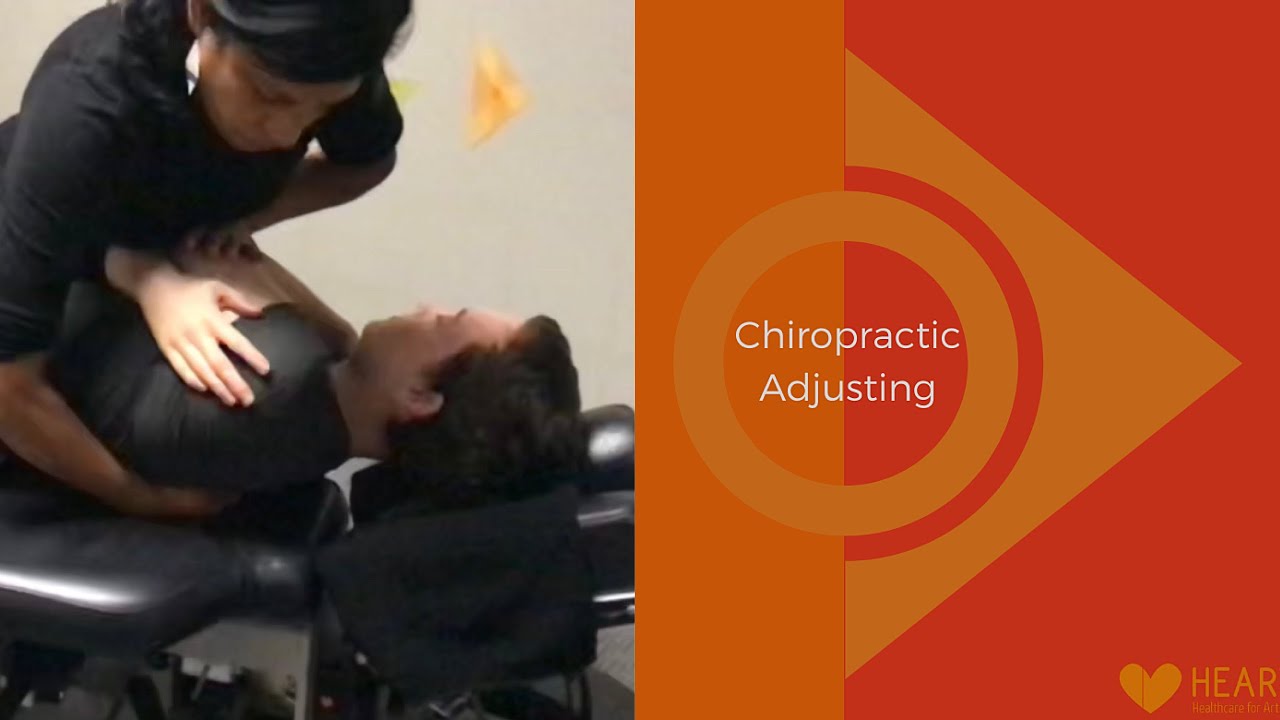
Adjusting, people love it, people fear it, let’s demystify it!
As a sports chiropractor I diagnose and treat injuries in the whole body, not just the spine. And though it is not always necessary, when appropriate, adjusting an area can be a great addition to a treatment.
There are many ways of adjusting, and "POP" isn't always necessary. Helping to bring mobility with stretching and releasing the tissue around a joint can also be very effective. So, in this video you will see the type of adjustments that get "POPs", deep specific stretching around joints to decrease tension in an area, and the use of a little tool called an activator that allows us to produce a quick movement of a joint with out placing tension on any other part of the region.
Some people fear that if they go to a chiropractor, they HAVE to get adjusted. NOPE! As a blanket statement, I would say I adjust a body part in about 60% of my patient visits as a part of a treatment that includes many other elements (activity modification, rehab exercises, stretching, soft tissue work, nutrition, etc.) I have some patients I have never adjusted and some patients that prefer I never adjust certain areas. It’s all about appropriate treatment for the condition combined with patient consent and preferences. As a patient, you ALWAYS get the last word on what we do to treat your symptoms. I will always give you my professional opinion, but you decide.
We spend YEARS in school learning to adjust, it’s not easy to do it comfortably and well. I have worked very hard to be a great adjuster, with a gentle technique.
Thank you Hanna Copper, you’re a great adjusting model! (No Hanna Coppers were hurt in the making of this video) If you know someone that could use this info, share it! _________________________________________________________________________
Subscribe for more videos:
Follow along on new series as they go up on Instagram, before they come to YouTube:
Let's connect...
Website:
Facebook:
#hearthealthcareforartits
#adjusting
#chiropractic


![Zara Larsson - I Would Like [Audio]](https://lh3.googleusercontent.com/blogger_img_proxy/AEn0k_sJCfsBP_O3g0la_Pg8A0XZkq-B-_JMy1tWh7gugi-2iol49R0kh1VPK1ixKzQ9Fa5ilubsnRZfX89r_c_vVjR7q0YrF-MQdvGz7D7yXlLRPamBLA=w680)


0 Comments